

AI TOOLS FOR IMAGES
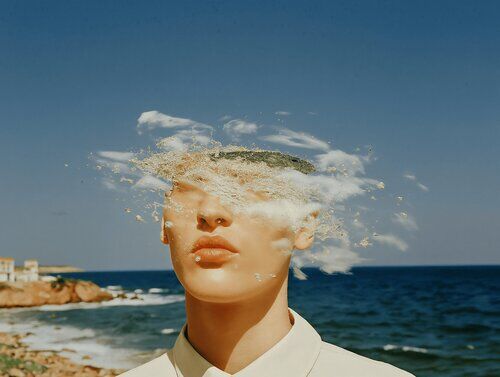






The Best AI Image Generators and Editing Platforms
Transforming the Way We Create Visual Content
Visual communication has always played a central role in human interaction. From early cave paintings to modern photography and digital graphics, images help people communicate ideas faster and more effectively than words alone. In today's digital environment—dominated by websites, social media, online marketing, and e-commerce—visual content has become one of the most powerful tools for capturing attention and conveying information.
However, creating professional-quality visuals has traditionally required specialized skills, expensive design software, and significant time investment. Graphic designers spend years mastering tools such as photo editors, illustration programs, and layout software. Businesses often need to hire designers or agencies to create visual content for advertising, websites, and branding.
Artificial Intelligence (AI) is changing this landscape dramatically. AI-powered image tools allow users to generate, edit, enhance, and transform images in seconds—often using simple text prompts or automated editing features. These tools are making visual creativity more accessible than ever before, enabling individuals and organizations to produce high-quality visuals without advanced technical skills.
AI image tools are now widely used by marketers, bloggers, social media creators, entrepreneurs, educators, and designers. They help streamline workflows, reduce costs, and unlock new forms of creativity.
This article explores the world of AI tools for images, explaining how they work, their key features, their benefits, common use cases, challenges, and the exciting future of AI-powered visual creation.
What Are AI Image Tools?
AI image tools are software platforms that use artificial intelligence—particularly machine learning and deep learning—to create, modify, or enhance visual content. Instead of manually designing images pixel by pixel, users can simply describe what they want, upload a photo, or select editing options. The AI then analyzes patterns from massive datasets of images to generate or transform visuals automatically.
These tools can perform a wide variety of tasks, including:
- Generating images from text descriptions
- Enhancing image quality
- Removing backgrounds
- Converting sketches into realistic images
- Creating illustrations or digital art
- Editing photos automatically
- Generating marketing visuals
AI image technology has dramatically reduced the time and effort required to produce professional-quality visuals.
How AI Image Tools Work
Most AI image tools rely on advanced machine learning models trained on millions—or even billions—of images. These models learn patterns such as shapes, colors, textures, lighting, and composition.
When a user interacts with the tool, the AI uses this learned knowledge to create or modify images based on instructions.
Several key technologies power AI image tools:
1. Generative AI Models
Generative AI models can create entirely new images that did not previously exist. These systems interpret text prompts and transform them into visuals.
For example, a user might type:
“a futuristic city skyline at sunset with flying cars”
The AI then generates a unique image matching that description.
2. Image Recognition
AI can analyze the contents of images to identify objects, people, landscapes, and patterns. This capability allows tools to automatically edit or enhance specific parts of a photo.
3. Image Enhancement Algorithms
AI-powered enhancement tools can improve image resolution, reduce noise, sharpen details, and correct lighting automatically.
4. Style Transfer
Style transfer technology allows AI to apply artistic styles—such as watercolor, oil painting, or comic illustration—to photographs or drawings.
These technologies combine to create powerful tools that make visual creativity accessible to everyone.
Benefits of AI Image Generation
The popularity of AI image tools has grown rapidly because they offer several significant advantages.
Faster content creation
Creating graphics manually can take hours or even days. AI tools can generate images within seconds, dramatically reducing the time required to produce visual content.
Lower design costs
Hiring professional designers or purchasing stock images can be expensive. AI tools allow businesses to create custom visuals without large budgets.
Unlimited creative possibilities
AI image generators can create unique artwork and illustrations that may not exist anywhere else.
Improved marketing efficiency
Businesses can generate visual content quickly for websites, social media posts, advertising campaigns, and presentations.
Best AI Tools for Image Generation
Several AI platforms have become popular for generating and editing images.
Below are some of the most widely used AI image tools available today.
DALL·E
AI Image Generation from Text
DALL·E developed by OpenAI is one of the most well-known AI image generators. DALL·E allows users to create images simply by typing a description of what they want to see. The AI then generates unique images based on that description.
For example, a user could request:
“a futuristic city skyline at sunset in a watercolor style”
and the AI will generate original artwork based on that prompt.
Key features
• text-to-image generation
• creative artwork creation
• image editing capabilities
• style customization
• creative artwork creation
• image editing capabilities
• style customization
DALL·E is widely used by designers, marketers, and content creators who want to quickly generate visual concepts.
✅ Find out more about DALL-E
Midjourney
AI Art Creation Platform
Midjourney is another powerful AI image generator known for producing highly artistic images.
Midjourney has gained popularity among digital artists and creative professionals because of its ability to produce visually striking illustrations.
Key features
• high-quality artistic image generation
• unique visual styles
• community-driven creative platform
• powerful prompt-based image creation
• unique visual styles
• community-driven creative platform
• powerful prompt-based image creation
Many artists use Midjourney to explore new creative ideas and generate concept art.
✅ Find out more about Midjourney
Stable Diffusion
Open Source AI Image Model
Stable Diffusion is an open-source AI image generator developed by Stability AI.
Unlike some other AI image tools, Stable Diffusion allows users to run the model locally on their own computers or servers.
Key features
• open-source AI image generation
• customizable models
• local installation options
• large developer community
• customizable models
• local installation options
• large developer community
Stable Diffusion is popular among developers and researchers who want greater control over AI image generation.
✅ Find out more about Stable Diffusion
Canva AI
Simple AI Design for Businesses
Canva has integrated AI features into its design platform, making it easier for users to generate images and graphics.
Canva’s AI tools allow users to create visual content for social media, marketing campaigns, and websites.
Key features
• AI image generation
• automated design suggestions
• social media templates
• drag-and-drop design interface
• automated design suggestions
• social media templates
• drag-and-drop design interface
Because of its simplicity, Canva is widely used by small businesses and entrepreneurs.
✅ Find out more about Canva
Adobe Firefly
AI Design and Image Editing
Adobe Firefly developed by Adobe brings AI-powered creativity to professional design workflows.
Adobe Firefly integrates with creative applications such as Adobe Photoshop and Adobe Illustrator.
Key features
• generative image creation
• AI-based photo editing
• text effects generation
• integration with Adobe Creative Cloud
• AI-based photo editing
• text effects generation
• integration with Adobe Creative Cloud
Firefly is designed for designers who want to combine AI tools with professional editing software.
✅ Find out more about Adobe Firefly
Runway ML
AI Video and Image Editing
Runway is an AI-powered creative platform used for both video and image editing.
The platform includes AI tools for background removal, image generation, and visual effects.
Key features
• AI image generation
• background removal
• video editing tools
• creative AI effects
• background removal
• video editing tools
• creative AI effects
Runway is often used by filmmakers, designers, and digital artists.
✅ Find out more about Runway
AI Image Generators
AI generators create images from text prompts.
These tools are widely used for digital art, concept design, and creative content.
AI Photo Enhancers
Photo enhancement tools automatically improve image quality by adjusting lighting, color balance, and resolution.
These tools are useful for photographers, content creators, and businesses.
AI Design Platforms
Some platforms combine multiple AI tools into one system, allowing users to create graphics, edit photos, and generate visuals all in one place.
These platforms are particularly useful for marketers and social media managers.
AI Background Removers
Specialized AI tools focus on removing backgrounds from images instantly.
They are widely used in e-commerce and product photography.
Use Cases for AI Image Tools
AI image tools are now used across many industries.
Marketing and Advertising
Marketing teams rely heavily on visuals to capture audience attention.
AI tools allow marketers to generate:
- Promotional graphics
- Social media visuals
- Advertising banners
- Product illustrations
This speeds up campaign creation and reduces design costs.
E-Commerce
Online stores require large numbers of product images.
AI tools help businesses:
- Remove backgrounds
- Improve product photos
- Generate product mockups
This improves the visual appeal of online listings.
Content Creation
Bloggers, YouTubers, and social media creators need consistent visuals to support their content.
AI image tools help them produce:
- Blog illustrations
- Video thumbnails
- Social media graphics
Without needing advanced design skills.
Graphic Design
Professional designers are also using AI to accelerate their workflows.
AI tools can handle repetitive tasks, allowing designers to focus on more creative aspects of their work.
Education
Students and teachers can use AI image tools to create visual materials for presentations, assignments, and learning resources.
Challenges and Limitations
Despite their advantages, AI image tools also present some challenges.
Copyright and Ownership Issues
Since AI models are trained on large image datasets, questions sometimes arise about who owns the generated images.
This is an ongoing legal and ethical discussion.
Accuracy and Control
AI-generated images may not always perfectly match user expectations. Sometimes multiple attempts are needed to get the desired result.
Ethical Concerns
AI image technology can potentially be misused to create misleading or manipulated images.
Responsible use and clear guidelines are important to address these risks.
Dependence on AI
Over-reliance on AI tools may reduce the development of traditional design skills for some users.
Balancing AI assistance with human creativity is essential.
The Future of AI Image Tools
AI image technology continues to evolve rapidly.
In the near future, we can expect several exciting developments:
More Realistic Image Generation
AI models are improving quickly, producing increasingly realistic and detailed images.
Real-Time Image Creation
Future tools may allow users to generate and edit images in real time while collaborating with AI.
Integration with Other AI Tools
AI image tools will likely integrate with video generation, 3D design, and virtual reality platforms.
This could enable creators to generate entire multimedia experiences using AI.
Personalized Visual Content
AI systems may learn individual user preferences and generate visuals tailored specifically to their style and needs.
Conclusion
AI tools for images are revolutionizing the way visual content is created. By combining powerful machine learning algorithms with user-friendly interfaces, these tools allow anyone to generate, edit, and enhance images quickly and easily.
From marketing and e-commerce to education and digital art, AI image tools are helping individuals and businesses produce professional-quality visuals without the need for advanced design skills or expensive software.
Although challenges such as copyright issues and ethical concerns remain, the benefits of AI image tools are undeniable. As technology continues to evolve, these tools will become even more powerful, opening new possibilities for creativity and innovation.
Ultimately, AI is not replacing human creativity—it is expanding it. By working alongside intelligent tools, creators can focus more on ideas and storytelling while AI handles the technical aspects of image creation.
👉 The future of visual content is increasingly powered by artificial intelligence, and those who learn to use these tools effectively will have a significant advantage in the digital world.